
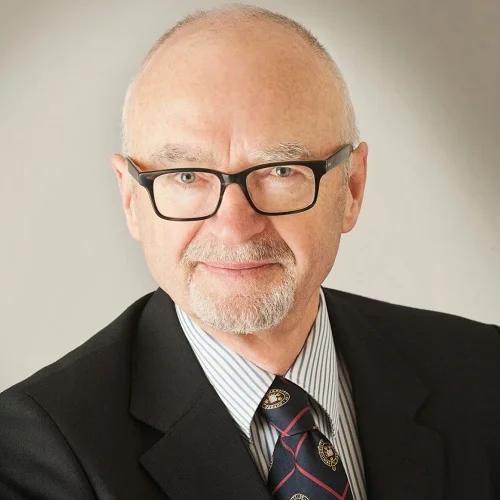
Jo Revill, Mosaic, talks to Al Aynsley-Green, Mosaic’s Patron, about his experience of childhood bereavement.
Some people take what has happened to them in childhood and find a way of building on the grief to help others who are left behind in their desolation. At Mosaic, there are many adults who work with the charity who lost someone very important to them in childhood, often a parent, who want to help young people feel less desolate and alone.
Few people have done more than Mosaic’s patron, Sir Al Aynsley-Green, to help advance the cause of childhood bereavement support, within a wider context of child health.
Sir Al, an eminent paediatric endocrinologist and researcher, was the country’s first independent Children’s Commissioner back in 2005. His task was to make people – government, health service leaders, educationalists – listen to children and those who supported them. More recently, he has focussed on the meaning of compassion in our health service and has become the country’s first Professor of Compassionate Care.
He is also an ABC, an Adult Bereaved as a Child. No-one knows the true number of ABCs in the UK because no-one is counting them. But it’s estimated that one in 29 children under the age of 18 will be bereaved through the death of someone close to them.
At the age of 10, Sir Al described what happened to him. “My father had moved us down from the north of England and a mining community to the south to give us a better chance in life. However, he developed pancreatic cancer at the age of 54.
“I went to the hospital and sat in the corridor for a long time when he was admitted. What I know now, but didn’t then, is that my father had begged the staff to let him see me, but they refused. My aunt came to me and told me that my father had died. She said:’ You’re the man of the family now, you’ll need to look after your mother and your sister.’”
Two weeks later, I was back at school and my music teacher said to the class in our lesson, ‘Who isn’t happy here?’ I burst into tears and had really no idea of how to handle it at all. The adults around me behaved as if nothing had happened.”
This experience partly led him to develop an ambition to be a doctor to treat others, and to help prevent further deaths. Yet it wasn’t until many years later that he was able to come to terms with the real impact of his early bereavement, and how it might have shaped his thinking.
All of this was revisited for him recently when his wife of 57 years, Rosemary, died due to vascular dementia. ‘During my experience of looking after her, I saw the extremes of great compassion from the care home staff to attitudes in the medical profession that disturbed me greatly.”
After a difficult few months, Sir Al was able to secure for his adored wife a peaceful death at their home outside Salisbury, with the help of community nurses. “She died with dignity, but my experience of those months made me think very hard about what we mean about compassionate care and where it has gone.”
His view, based on existing and new research which looks at the neurological impact of grief on childhood, is that an early, traumatic bereavement can leave a person overly sensitised to adversity. “You are essentially waiting for a catastrophe to happen, so that when it does, you react to it in a greater and much exaggerated reaction to the loss. There is a psycho-pathology that comes with early grief.
“What I do know is that being able to talk about your grief, anxiety and depression is incredibly important for children. For some, it is about writing down feelings, and for others, it might be painting or composing music. What matters is that freedom of expression. And I always come back to what the late Queen said so memorably: ‘Grief is the price we pay for love.’”
Does that mean that there is any more positive side to it?
“I do think that there is an altruism that can come from a very early experience of grief and that this allows you a way in to understand others. It can allow you to touch others’ lives, by asking them about themselves, perhaps by not being scared to ask them how they are feeling.
“When I trained as a young medic, empathy wasn’t a great part of that training. Now I see it as the core of being able to offer genuinely compassionate care.”
Sir Al has enjoyed his involvement with Mosaic and applauds the charity’s work in supporting so many children and young people across Dorset. “What Mosaic does is essential. For every child, you’re also supporting the family, the teachers, the wider community. I hope that everyone takes an interest in it and understands that silence around bereavement is not a way of coping – listen and talk to children, and they will tell you how they feel.”